Humphead Māori Wrasse
Scientifically known as Cheilinus undulatus, this famed reef fish is known for its flashy colours and sociable personality.
Kingdom
Animalia
Phylum
Chordata
Class
Actinopterygii
Order
Perciformes
Family
Labridae
Genus
Cheilinus
#Description
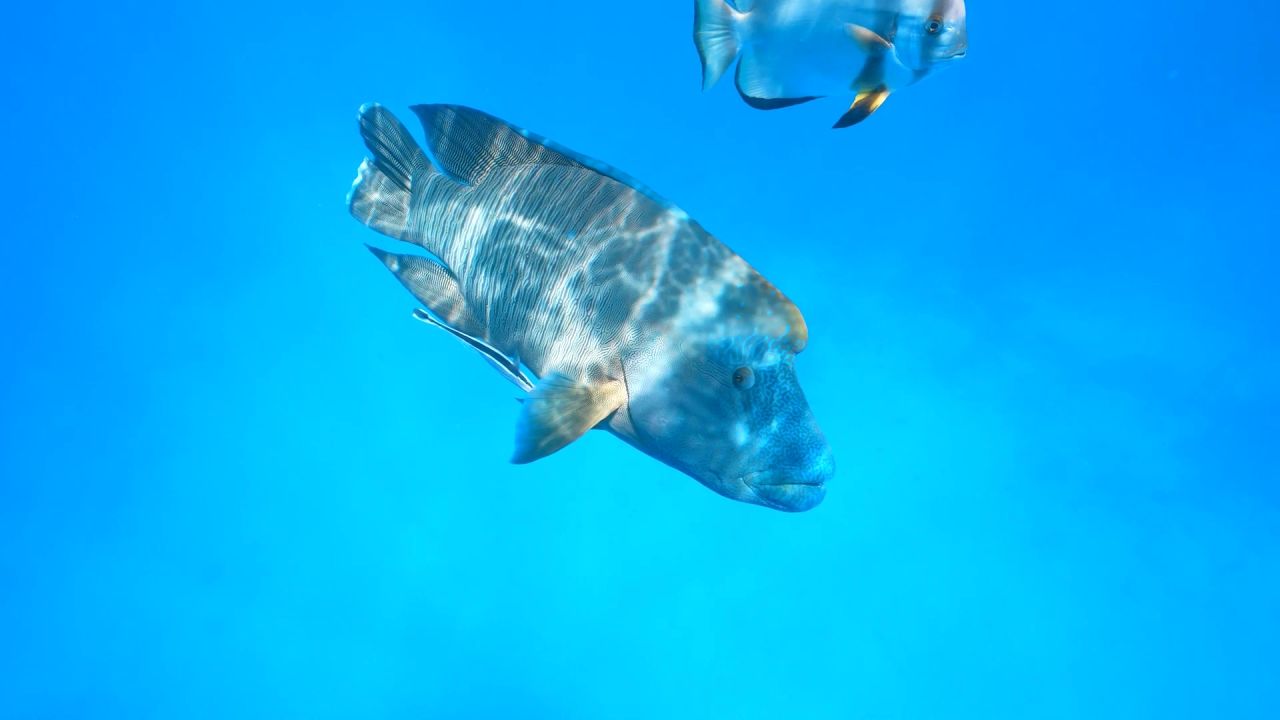
Reaching lengths of 2 metres and weighing up to 180 kilograms, the Māori Wrasse is one of the largest fish on the reef. This wrasse species earns its common name for their intricate patterns. They are also known as the humphead wrasse for the large bump on their foreheads. These beasts are easily recognisable due to their bright colours, sizeable lips and line patterns.
#Habitat and Diet
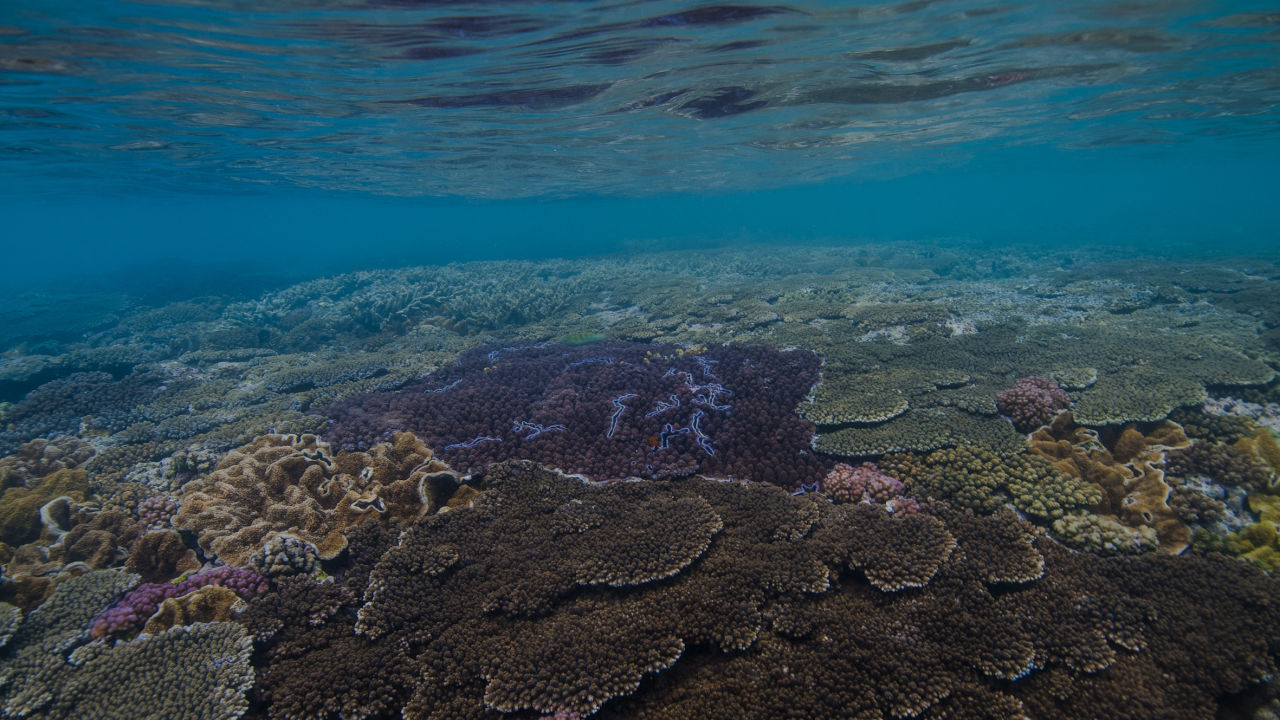
Where juveniles use shallow, coral‑rich lagoons, the adults prefer outer reef slopes, channels and deeper reef habitats. Throughout the day they spend their time feeding and at night, they find shelter.
They have strong teeth and can tolerate toxins, allowing them to eat hard-shelled prey such as sea snails, sea urchins and crustaceans. They also feed on smaller fish and crown-of-thorns starfish.
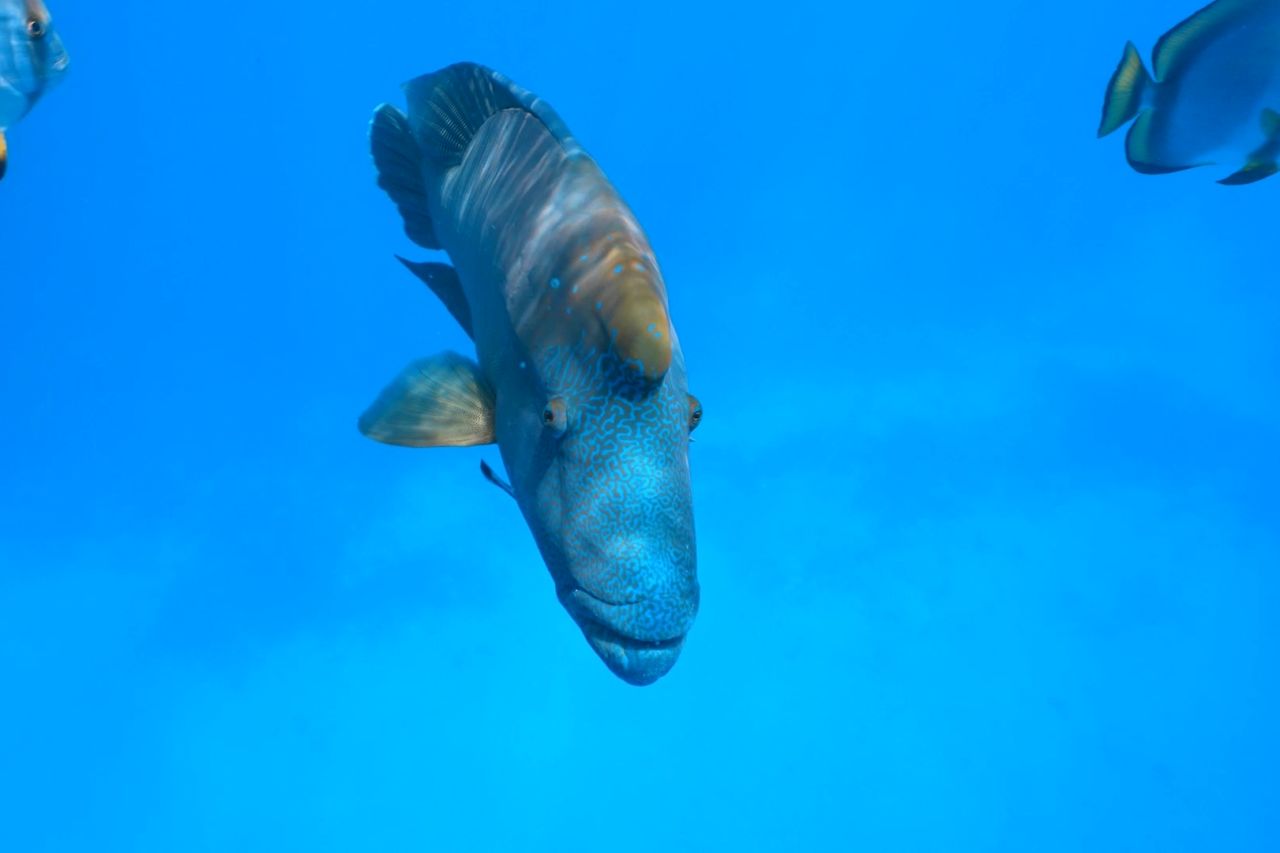
An adult Māori wrasse (Cheilinus undulatus) swimming. Credit: Johnny Gaskell
#Māori wrasse facts
1.
They can live at least 30 years in the wild.
2.
Their friendly and curious demeanour make them a favourite among the diving community.
3.
Similar to the potato cod, this species change from female to male.
4.
They have an appetite for crown-of-thorns starfish and sea urchins which can be harmful to coral reefs.
5.
With over nearly 600 species in the wrasse family, the Māori wrasse is the largest in the family.
6.
The bulge on their forehead becomes more prominent with age.
#Behaviour and reproduction
Although some Māori wrasse will stay within small groups, this species is typically solitary. Māori wrasse are protogynous hermaphrodites, individuals typically start life as females and can change to males later in life.
In large mating groups of both males and females, they form pairs to fertilise eggs which have been released into the water by females. Adult fish do not look after their hatched young making them vulnerable to predators.
#Threats
As a large fish, the Māori wrasse have few predators. However, they are susceptible to human interference in fishing and aquarium trades. There are strict protection measures to mediate overfishing and habitat destruction.